
Meet the World’s Most Advanced AI Glasses: Meta Ray-Ban Display
The intersection of fashion, optics, and artificial intelligence has long fascinated futurists, tech enthusiasts, and trendsetters alike. The vision of advanced smart eyewear is being realized by the Ray-Ban AI Glasses, which are designed by combining AI-powered features, immersive visuals, and real-time information in a stylish wearable device. Whether city streets are being walked through, meetings are being attended, or public transit is being navigated, users can stay connected without constantly reaching for their smartphones.
Design meets substance in these frames. The Ray-Ban AI Glasses combine Ray-Ban’s iconic style with modern technology, featuring classic shapes, premium materials, and the familiar details that have made the brand beloved for decades. Meta’s technology, silently integrated, delivers heads-up displays, voice assistance, gesture control, and always-on connectivity. Under the hood, powerful chips enable low latency, efficient power use, smart sensors, and AI algorithms to interpret the environment. Smart cameras, motion sensors, and spatial audio help make these glasses more than wearable fashion—they become mobile computing devices.
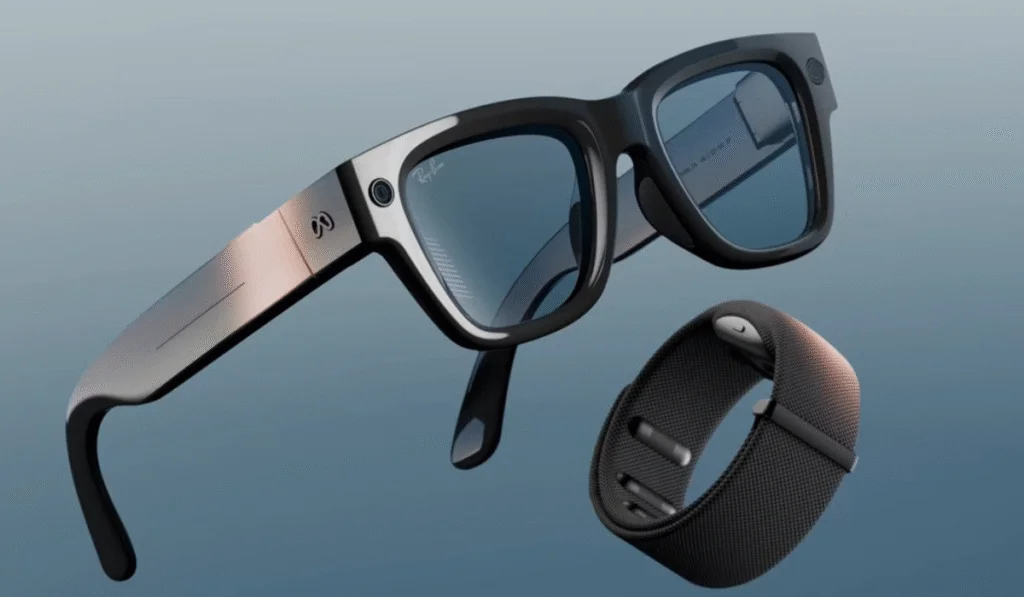

Battery life, display clarity, and comfort have long been major challenges in wearable tech. These issues are addressed by the Ray-Ban AI Glasses through optic-grade lenses, energy-efficient microOLED or AR display panels, and a lightweight frame design. Balanced weight distribution has been engineered so that long-term wear does not cause discomfort. Heat management systems are also integrated to maintain stable performance. Morning-to-evening usage is being achieved without frequent recharging, making the Ray-Ban AI Glasses a reliable option for performance-focused users.
Privacy and data security are areas where scrutiny has been high. Meta insists that on-device processing handles sensitive tasks. Visual data is processed locally; user consent is required for any cloud interaction. Facial recognition features can be disabled. Secure modes are included for public spaces. Transparency reports will track app permissions, storage of visual recordings, and third-party access. Such protections are required if AI glasses are to earn trust.
What Makes Ray-Ban AI Glasses Different from Smart Glasses
When comparing Ray Ban AI Glasses with earlier smart glasses, several key improvements stand out. First, display technology has been upgraded, delivering high-resolution visuals through microOLED or AR panels. It produces sharp, bright images with strong contrast and maintains vivid colors even in sunlight. Real-world views are shown with minimal lag, while gesture controls, voice commands, and frame taps allow easy interaction.
Second, hardware design has been refined using lightweight metals and composite materials. The lenses are made more comfortable with scratch-resistant and UV-protected features, and some are polarized. Battery life is improved for longer use, while magnetic docks and USB-C make charging faster. Hidden vents help manage heat for better comfort. Finally, smart software ensures a smooth and responsive user experience.
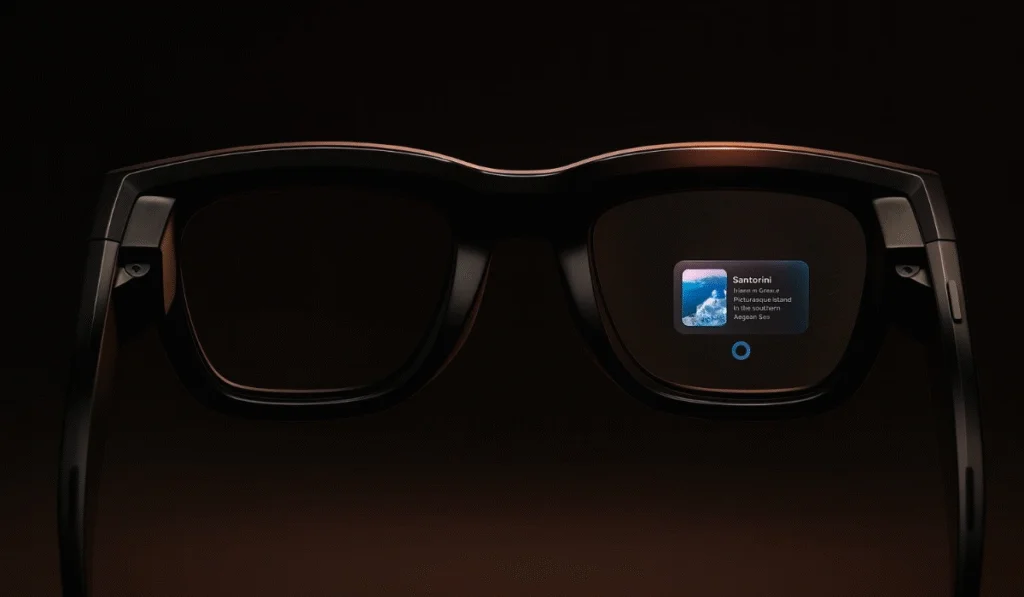
The Ray-Ban AI Glasses use advanced AI algorithms to detect context automatically: notifications are muted when in a meeting, visual prompts are dimmed indoors, and spatial audio adjusts when traffic is nearby. Voice assistants in the Ray-Ban AI Glasses are highly responsive, with natural-language understanding that can process multi-step commands. AI vision in the Ray-Ban AI Glasses helps identify objects, translate text in real time, and provide navigation overlays.
Finally, social integration in the Ray-Ban AI Glasses is deep. Apps are tailored for everyday tasks such as camera functionality, media playback, communication, mapping, and information retrieval. Content creators will find value in easy capture and sharing, while enterprise users benefit from productivity tools. These combined enhancements push the Ray-Ban AI Glasses far ahead of earlier smart glasses, positioning them as consumer-ready, stylish devices that amplify human capabilities.
Ray-Ban AI Glasses: Uses and Daily Scenarios
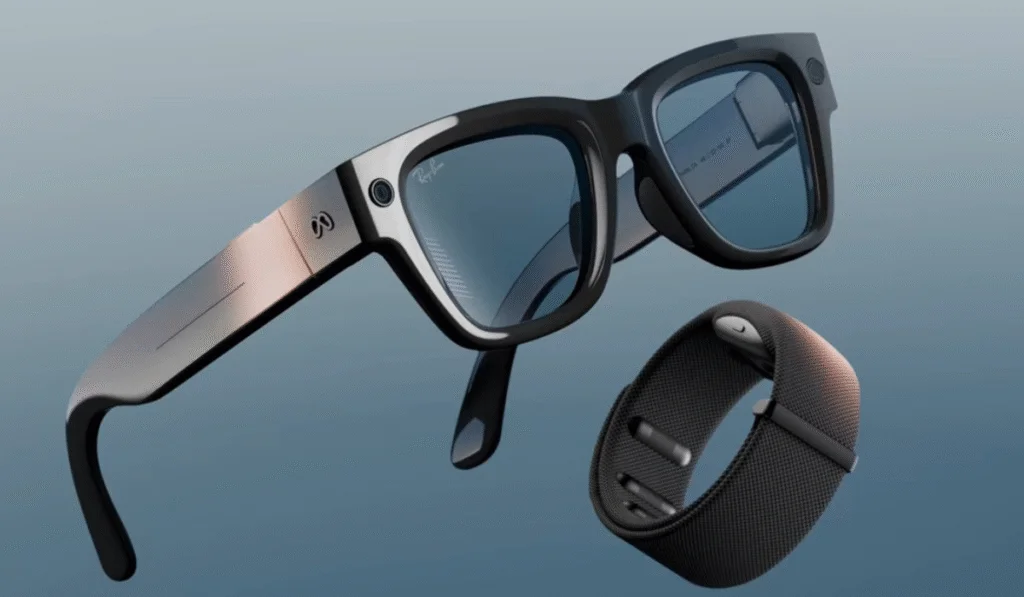
Imagine walking through a busy urban area where notifications appear subtly in your peripheral vision without blocking your view. In addition, street signs are translated instantly, and voice commands quickly display biometric fitness stats. Media playback starts exactly when triggered, ensuring smooth control. Similarly, at an outdoor concert, spatial audio replaces traditional earphones, allowing sound to be experienced without full isolation. During work, calendar events, reminders, document previews, and map overlays can be accessed while moving, maintaining safety and awareness . Moreover, different user groups gain significant benefits. Students and educators use it for hands-free learning and visual sharing, while content creators capture vlogs, timelapses, and travel moments without bulky equipment. Developers build applications using AI vision and AR overlays, and fitness users receive posture guidance, environmental alerts, and performance feedback. Finally, elderly users or individuals with mobility limitations benefit from object detection, obstacle warnings, and voice-based navigation, which help improve independence.
Challenges and Considerations
Despite its promise, certain challenges persist. Battery capacity always competes with size and weight. Display brightness must scale for outdoor use without draining power. Privacy remains a constant concern. Any smart camera raises questions about consent in public. Comfort over long wear periods has to be tested across diverse head shapes. Durability—resistance to sweat, temperature extremes, water ingress—is essential. Price will be a barrier for many early adopters. Compatibility with existing apps and ecosystems might limit usefulness initially. Lastly, software updates must be frequent to patch bugs, improve AI features, and ensure security.
Ray-Ban AI Glasses: What the Launch Means for the Wearables Market
The introduction of Meta Ray-Ban Display signals a turning point. Wearable technology has moved beyond smart-watches and fitness bands. Devices that overlay computation and perception into daily life now seem viable. Competing firms like Apple, Google, Snap, and Bose will feel pressure to accelerate their own AI glasses roadmaps. Prices are expected to drop over time. As more accessories, apps, and use cases emerge, the ecosystem will grow richer. Regulations around data, privacy, and public safety will likely adapt. Standards for optical clarity, display safety (e.g. blue light, eye strain), and wireless protocol interoperability may be defined more strictly.
Final Thoughts
Meta Ray-Ban Display is not just another gadget—it represents the convergence of AI, fashion, and augmented reality. It pushes the envelope in design, utility, and user experience. For those who want to stay ahead of the curve, these glasses offer a glimpse into the future of computing. As hardware improves, software matures, and ecosystems expand, the promise of AI glasses will become more tangible for everyday users. Watching this space will reveal what truly changes how people see the world—literally and figuratively.